Quite a number of aircraft and ships are expected to come to LIMA 09'. Among them are the following:
Aerospace:
Sukhoi Su-30MKM jet fighters (Malaysia)
Boeing AH-64 Apache attack helicopters (Singapore)
Lockheed Martin F-16 Fighting Falcon jet fighters (Singapore)
Boeing B-52 Stratofortress strategic bombers (USA)
Sikorsky UH-60 Black Hawk transport helicopters (Brunei Darussalam)
Boeing (McDonnell Douglas) F/A-18D Hornet jet fighters (Malaysia)
Mikoyan MiG-29N jet fighters (Malaysia)
AgustaWestland (Westland) Super Lynx multipurpose helicopters (Malaysia)
Eurocopter AS555 Fennec multipurpose helicopters (Malaysia)
Bombardier 415MP maritime surveillance aircraft (Malaysia)
Maritime:
DCNS Scorpene class submarines (Malaysia)
Monday, November 2, 2009

LIMA 09' exhibition locations
LIMA 09' is expected to be held in 2 locations:
The Maritime exhibiton at Porto Malai;
the Aerospace exhibiton at the Mahsuri International Exhibition Centre (MIEC)
The Maritime exhibiton at Porto Malai;
the Aerospace exhibiton at the Mahsuri International Exhibition Centre (MIEC)
LIMA 2009 to attract 330 companies
Some 330 companies from 24 contries around the world are to make an appearance at this year's LIMA.
Bernama reported that companies from Australia, Russia, Norway, Poland, the UK, South Africa and Singapore, to name a few, will be participating in the exhibition.
Also, an expected 46,000 trade visitors and 40,000 public will be expected to visit LIMA 09'.
Bernama reported that companies from Australia, Russia, Norway, Poland, the UK, South Africa and Singapore, to name a few, will be participating in the exhibition.
Also, an expected 46,000 trade visitors and 40,000 public will be expected to visit LIMA 09'.
Saturday, September 26, 2009
KD Tunku Abdul Rahman comes to Malaysia
On September 18, 2009, Malaysia's first submarine, the KD Tunku Abdul Rahman, a Scorpene class diesel-electric submarine, reached home port for the first time, i.e. the Teluk Sepanggar RMN naval base, Sabah.
In a nutshell, the lowdown for the Scorpene is:
Displacment: 1,700 tons
Propulsion: Diesel-Electric
Speed: 20 knots submerged, 12 knots surfaced
Armament: 6 bow-mounted 533mm torpedo tubes, with provision for
torpedoes, missiles and mines
In a nutshell, the lowdown for the Scorpene is:
Displacment: 1,700 tons
Propulsion: Diesel-Electric
Speed: 20 knots submerged, 12 knots surfaced
Armament: 6 bow-mounted 533mm torpedo tubes, with provision for
torpedoes, missiles and mines
Friday, September 25, 2009
USAF Thunderbirds set to make appearance at Subang
Come this 2nd and 3rd October, the skies of KL will be literally filled with thunder as the United States' Air Force air demonstration team, the Thunderbirds, streak through the air above the RMAF Subang air base.

The aerobatics team with over 50 years of history comes to Malaysia sporting the latest technology for pulling off a crowd-wowing spectacle. The (non-living) stars of the show? The newest versions of the lightweight agile F-16 Fighting Falcon jet fighters, i.e. the F-16C/D Block 52. The F-16 is capable of speeds up to Mach 2 and is popular among many countries, with 25 operating this versatile jet fighter.
Also making an appearance is a C-17 Globemaster III versatile cargo aircraft. The RMAF will also reportedly send out our own Sukhoi aerobatics team on that day.
Another famed aerobatics team from the U.S. is the US Navy's Blue Angels flight demonstration team. They use the F/A-18 Hornet, a sleek naval multirole jet. The RMAF also has 8 of these aircraft of the D version.
Picture obtained from:

The aerobatics team with over 50 years of history comes to Malaysia sporting the latest technology for pulling off a crowd-wowing spectacle. The (non-living) stars of the show? The newest versions of the lightweight agile F-16 Fighting Falcon jet fighters, i.e. the F-16C/D Block 52. The F-16 is capable of speeds up to Mach 2 and is popular among many countries, with 25 operating this versatile jet fighter.
Also making an appearance is a C-17 Globemaster III versatile cargo aircraft. The RMAF will also reportedly send out our own Sukhoi aerobatics team on that day.
Another famed aerobatics team from the U.S. is the US Navy's Blue Angels flight demonstration team. They use the F/A-18 Hornet, a sleek naval multirole jet. The RMAF also has 8 of these aircraft of the D version.
Picture obtained from:
Wednesday, May 20, 2009
Kedah Class OPV/NPGV
Realising a need to replace some of its aging patrol vessels, the RMN launched a project in the 1990s to construct a new generation of Offshore Patrol Vessels (OPVs). Germany's Blohm + Voss (a subsidary of ThyssenKrupp Marine Systems) got the contract and based the Kedah class on its MEKO (MEhrzweck-KOmbination - mulitipurpose combination) concept.
The Type MEKO-100 RMN project was put into action with the signing of the contract for 6 vessels - the KD Kedah, the KD Pahang, the KD Perak, the KD Terengganu, the KD Kelantan and the KD Selangor. A further 21 more ships are in the works but are not confirmed yet.
The Kedah class OPV has 2 Caterpillar diesel engines chruning out 16,000 hp to variable-pitch propellers which can propel the vessel at over 22 knots. The ship is also designed to have low noise and radar detectability, and better heat dissipation via horizontal exhausts cooled with seawater. Provision is made for an Otobreda (formerly Oto Melara) 76 mm rapid-fire (85 rpm) main gun and a 30 mm Otobreda or Mauser short-range gun, as well as two 12.7 mm machine guns. There are also plans to equip the vessel with a RIM-116 (rolling airframe missile) antiaircraft weapon system. Much automation is also incorporated to run the ship's various electrical and engineering systems. Besides that, the ship has what one would term a 'Plug and Play' modular configuration with easy installation of components.
Production is undergoing at Penang's PSC Naval Dockyard with Blohm + Voss as a major subcontractor.
The Type MEKO-100 RMN project was put into action with the signing of the contract for 6 vessels - the KD Kedah, the KD Pahang, the KD Perak, the KD Terengganu, the KD Kelantan and the KD Selangor. A further 21 more ships are in the works but are not confirmed yet.
The Kedah class OPV has 2 Caterpillar diesel engines chruning out 16,000 hp to variable-pitch propellers which can propel the vessel at over 22 knots. The ship is also designed to have low noise and radar detectability, and better heat dissipation via horizontal exhausts cooled with seawater. Provision is made for an Otobreda (formerly Oto Melara) 76 mm rapid-fire (85 rpm) main gun and a 30 mm Otobreda or Mauser short-range gun, as well as two 12.7 mm machine guns. There are also plans to equip the vessel with a RIM-116 (rolling airframe missile) antiaircraft weapon system. Much automation is also incorporated to run the ship's various electrical and engineering systems. Besides that, the ship has what one would term a 'Plug and Play' modular configuration with easy installation of components.
Production is undergoing at Penang's PSC Naval Dockyard with Blohm + Voss as a major subcontractor.
Tuesday, February 10, 2009
How it all began

It began with the vision of one man...
The picture is taken from
"MAHATHIR MOHAMAD
an illustrated biography"
by E.Yu
published by MPH Publishing
"This book will attract readers especially younger readers to know more about Prime Minister Dr Mahathir Mohamad and perhaps they too would admire, respect and love him like I do”
- E. Yu, taken from the Foreword
Click here to view and/or get a copy of the book.
Read the article/interview published in THE SUN here.
Thursday, January 29, 2009
News - Bernama 29/1/09
Malaysia Officially Takes Delivery Of First Scorpene Submarine
Malaysia took delivery of the KD Tunku Abdul Rahman, its first submarine, at the Toulun naval base, France, on Saturday. It was launched in October 2007 and had been undergoing trials at sea.
Malaysia's second submarine, KD Tun Razak, is expected to be delivered in October this year.
Refer to 'Scorpene subs laid down and launched'
Malaysia took delivery of the KD Tunku Abdul Rahman, its first submarine, at the Toulun naval base, France, on Saturday. It was launched in October 2007 and had been undergoing trials at sea.
Malaysia's second submarine, KD Tun Razak, is expected to be delivered in October this year.
Refer to 'Scorpene subs laid down and launched'
Shipborne Weapons - Missiles
3. Missiles
Missiles are considered one of the newer weapons to be used on ships today. Their uses include anti-surface, anti-air and even anti-submarine warfare. With their advent, naval warfare progressed from just pure on-surface to subsurface and finally above-surface warfare.
The first missiles used operationally was in WW2 with the German V-1 cruise missile and the V-2 ballistic missile.
Cruise missiles are generally powered by jets and follow a flat trajectory to its target. It didn't take long for the US and the USSR to mount such cruise missiles on their ships and the Regulus cruise missile became one of the first such operational naval missiles. The Soviets came up with the SS-N-1 Scrubber. These designs evolved into modern cruise missiles like the Harpoon, Tomahawk, and the SS-N-19 Shipwreck.
Another type of missile, the ballistic missile, follows a ballistic trajectory(that is, a parabola) from its launch point to its target. The Soviets developed the first ballistic-missile submarines, the Zulu-class, which carried modified Scud missiles. NATO responded with the Polaris. Today's naval ballistic missiles are exclusively carried on SSBNs (ballistic missile submarines), which carry modern D-5 Trident and SS-N-20 Seahawk ballistic nuclear missiles. With their immense firepower, these subs are considered one of the most powerful weapons in the world.
Antiship missiles are mostly cruise missiles with examples like the RGM-84 Harpoon, MBDA Exocet and others.
Lastly, warships also carry surface-to-air missiles (SAMs). These missiles are usually lighter than their land counterparts, examples being the SM-2 Standard, MBDA Sea Wolf and the SA-20 Gargoyle.
Missiles have become a major factor in naval warfare, with their high speed and long range forcing response times to become ever shorter. Clearly missiles will lead naval warfare into the future.
Missiles are considered one of the newer weapons to be used on ships today. Their uses include anti-surface, anti-air and even anti-submarine warfare. With their advent, naval warfare progressed from just pure on-surface to subsurface and finally above-surface warfare.
The first missiles used operationally was in WW2 with the German V-1 cruise missile and the V-2 ballistic missile.
Cruise missiles are generally powered by jets and follow a flat trajectory to its target. It didn't take long for the US and the USSR to mount such cruise missiles on their ships and the Regulus cruise missile became one of the first such operational naval missiles. The Soviets came up with the SS-N-1 Scrubber. These designs evolved into modern cruise missiles like the Harpoon, Tomahawk, and the SS-N-19 Shipwreck.
Another type of missile, the ballistic missile, follows a ballistic trajectory(that is, a parabola) from its launch point to its target. The Soviets developed the first ballistic-missile submarines, the Zulu-class, which carried modified Scud missiles. NATO responded with the Polaris. Today's naval ballistic missiles are exclusively carried on SSBNs (ballistic missile submarines), which carry modern D-5 Trident and SS-N-20 Seahawk ballistic nuclear missiles. With their immense firepower, these subs are considered one of the most powerful weapons in the world.
Antiship missiles are mostly cruise missiles with examples like the RGM-84 Harpoon, MBDA Exocet and others.
Lastly, warships also carry surface-to-air missiles (SAMs). These missiles are usually lighter than their land counterparts, examples being the SM-2 Standard, MBDA Sea Wolf and the SA-20 Gargoyle.
Missiles have become a major factor in naval warfare, with their high speed and long range forcing response times to become ever shorter. Clearly missiles will lead naval warfare into the future.
Shipborne Weapons - Torpedoes
2. Torpedoes
The modern definition for torpedoes came about during the 1870s as a self-propelled warhead that ran on or below the surface of the water. Previously the word torpedo also encompassed booby traps, land and naval mines and other 'hidden contact explosives'.
The first modern design for a torpedo came about in 1864 in Austria, where a naval officer proposed a manual rope-driven projectile floating on the water surface as a type of coastal defence. He brought the idea to Robert Whitehead, who thought of using first clockwork motors, then compressed air to power torpedoes. This culminated in the first true self-propelled torpedo, the Minenschiff (mine ship).
Gradual refinements improved performance but the basic compressed-air design remained essentially the same until 1904, when Whitehead's company developed the heated torpedo, which used injection and ignition of a liquid fuel into the compressed air to increase performance. The introduction of seawater as a coolant further increased performance by allowing more fuel to be burnt and later the steam generated from the seawater cooling the engine was also used as propulsion. As a result, by WW1 torpedoes could run 4 km at a high speed of 45 knots.
Between the war years, the Japanese tried substituting pure oxygen instead of plain compressed air (which contains only 21% oxygen) into their torpedoes. The result: the Type 93 'Long Lance' torpedo, reputedly the most advanced torpedo in the world at the time and even during WW2. It had a maximum range of 40km at 38 knots with a half-tonne warhead. By contrast, the standard U.S. destroyer-launched torpedo of WW2, the Mark XV, had a maximum range of 13.5km at 26.5 knots with a 375 kg warhead.
After WW2, types of propulsion for torpedoes diversified, including electric batteries, gas turbines and even rockets.
Most of today's torpedoes use either batteries or monopropellants, that is stable fuels that only react and produce energy under certain conditions. Most German and French torpedoes (including the Black Shark torpedo used on Malaysia's Scorpenes), are of the electric type. Most US and British torpedoes, however, use the Otto monopropellant gas turbine system. Examples include the Mark 48, 50 and 54 and the Tigerfish and Spearfish. Russian torpedoes use a mix of electric and fuel combustion systems.
A notable type of torpedo is the supercavitating torpedo, a torpedo that essentially forms a frictionless air bubble around itself. The Russian Shkval (Squall) is the apparent only example to date. Rocket-powered, this torpedo can run 13 km at an amazing 200+ knots!
Torpedoes have become an essential tool of naval warfare. Patrol boats, destroyers, cruisers, submarines and others carry them. Their hard-hitting capability ensures that they will be a force to be reckoned with for a long time to come.
The modern definition for torpedoes came about during the 1870s as a self-propelled warhead that ran on or below the surface of the water. Previously the word torpedo also encompassed booby traps, land and naval mines and other 'hidden contact explosives'.
The first modern design for a torpedo came about in 1864 in Austria, where a naval officer proposed a manual rope-driven projectile floating on the water surface as a type of coastal defence. He brought the idea to Robert Whitehead, who thought of using first clockwork motors, then compressed air to power torpedoes. This culminated in the first true self-propelled torpedo, the Minenschiff (mine ship).
Gradual refinements improved performance but the basic compressed-air design remained essentially the same until 1904, when Whitehead's company developed the heated torpedo, which used injection and ignition of a liquid fuel into the compressed air to increase performance. The introduction of seawater as a coolant further increased performance by allowing more fuel to be burnt and later the steam generated from the seawater cooling the engine was also used as propulsion. As a result, by WW1 torpedoes could run 4 km at a high speed of 45 knots.
Between the war years, the Japanese tried substituting pure oxygen instead of plain compressed air (which contains only 21% oxygen) into their torpedoes. The result: the Type 93 'Long Lance' torpedo, reputedly the most advanced torpedo in the world at the time and even during WW2. It had a maximum range of 40km at 38 knots with a half-tonne warhead. By contrast, the standard U.S. destroyer-launched torpedo of WW2, the Mark XV, had a maximum range of 13.5km at 26.5 knots with a 375 kg warhead.
After WW2, types of propulsion for torpedoes diversified, including electric batteries, gas turbines and even rockets.
Most of today's torpedoes use either batteries or monopropellants, that is stable fuels that only react and produce energy under certain conditions. Most German and French torpedoes (including the Black Shark torpedo used on Malaysia's Scorpenes), are of the electric type. Most US and British torpedoes, however, use the Otto monopropellant gas turbine system. Examples include the Mark 48, 50 and 54 and the Tigerfish and Spearfish. Russian torpedoes use a mix of electric and fuel combustion systems.
A notable type of torpedo is the supercavitating torpedo, a torpedo that essentially forms a frictionless air bubble around itself. The Russian Shkval (Squall) is the apparent only example to date. Rocket-powered, this torpedo can run 13 km at an amazing 200+ knots!
Torpedoes have become an essential tool of naval warfare. Patrol boats, destroyers, cruisers, submarines and others carry them. Their hard-hitting capability ensures that they will be a force to be reckoned with for a long time to come.
Shipborne Weapons - Naval Guns
Shipborne weapons have progressed from the mere sword and bow and arrow in ancient times to iron cannon in medieval times to a variety of surface, subsurface, and above surface weapons today.
Here is a list of the most common weapons used on naval platforms today:
1. Naval Gun/Cannon
Although the advent of gunpowder weapons came about in the 10th - 12th century AD, the first practical use of ship-mounted weapons only came about in the 15th century with sailing ships capable of mounting heavy guns on their decks. These cannon, though lethal, had a very slow rate of fire, and were too heavy to be maneuvered around in battle. Thus ships in the Age Of Sail had to mount large amounts of cannon on both sides of the ship to serve as a effective combat platform, and the action of firing a whole battery of guns on one side earned the term 'broadside'.
As technology progressed, sailing warships progressed from frigates to 'man-o-wars' to 'ships of the line', the line referring to the line of battle. Such ships of the line, the last major type of warship before the steam-powered ironclad, had up to three decks carrying over 120 cannon.

The USS Constellation, a typical frigate of the 18th century
With the advent of ironclads came a new innovation in gun design - the naval gun turret, first fielded on the USS Monitor. This invention enabled shipboard guns to be trained through a wide field, eliminating the need for large numbers of guns. Improvements in gun design also increased he range of naval engagements, and steam power became the main locomotive force for warships.

The USS Monitor
Most 19th century and early 20th century warships relied on increasingly larger calibre turret-mounted guns as their main armament while others, like destroyers, torpedo-boats and submarines, relied more on torpedoes to do damage. Such guns still did not have good gun accuracy, however, and in naval battles like Tsushima, the most number of hits scored on ships were still by smaller, faster-firing small-calibre guns which depended on luck and sheer rate of fire to strike the target, however damage was little.

The HMS Agammemmon, an example of a 'pre-dreadnought' like those at Tsushima
The improvement of gun aiming, directing and rangefinding helped solve the problem and in the 1900s, Britain came up with the first battleship that represented a revolution in naval warfare. HMS Dreadnought, was the first warship to feature all big-gun armament, and was heavily armoured, big pluses in battle.It represented such a major technological leap that all other warships that came after it and featured such designs were classified 'dreadnoughts'.
Aircraft and subsurface torpedoes, meanwhile, had matured into naval weapons and their superiority over the gun-armed battleship increased and culminated in the crippling and sinking of the German battleship Bismarck and the Japanese Yamato in WW2, both representing the pinnacle of battleship design, the latter's guns having a muzzle bore of 46 cm and able to hurl thousand-pound shells as far as 40+ km.
Even though this represented the end of the all-gun battleship as the premiere warship, the gun is still part and parcel of naval war platforms today. Every class of ship, from the humble patrol craft to the largest aircraft carrier, still carries guns for a whole range of purposes, including anti-aircraft and anti-missile warfare, ship-to-ship engagements and ship-to-land bombardment. The muzzle bore for these weapons ranges from the 7.62mm machine gun to the 40mm autocannon to the 155mm advanced gun system on the new Zumwalt-class destroyer. In the near future, electromagnatic rail guns capable of firing projectiles at hypersonic speeds (Mach 5 and above) are expected to be fielded on ships. Clearly the gun is still going to be with us for a long time to come.
Ironclad photo taken from
Here is a list of the most common weapons used on naval platforms today:
1. Naval Gun/Cannon
Although the advent of gunpowder weapons came about in the 10th - 12th century AD, the first practical use of ship-mounted weapons only came about in the 15th century with sailing ships capable of mounting heavy guns on their decks. These cannon, though lethal, had a very slow rate of fire, and were too heavy to be maneuvered around in battle. Thus ships in the Age Of Sail had to mount large amounts of cannon on both sides of the ship to serve as a effective combat platform, and the action of firing a whole battery of guns on one side earned the term 'broadside'.
As technology progressed, sailing warships progressed from frigates to 'man-o-wars' to 'ships of the line', the line referring to the line of battle. Such ships of the line, the last major type of warship before the steam-powered ironclad, had up to three decks carrying over 120 cannon.

The USS Constellation, a typical frigate of the 18th century
With the advent of ironclads came a new innovation in gun design - the naval gun turret, first fielded on the USS Monitor. This invention enabled shipboard guns to be trained through a wide field, eliminating the need for large numbers of guns. Improvements in gun design also increased he range of naval engagements, and steam power became the main locomotive force for warships.

The USS Monitor
Most 19th century and early 20th century warships relied on increasingly larger calibre turret-mounted guns as their main armament while others, like destroyers, torpedo-boats and submarines, relied more on torpedoes to do damage. Such guns still did not have good gun accuracy, however, and in naval battles like Tsushima, the most number of hits scored on ships were still by smaller, faster-firing small-calibre guns which depended on luck and sheer rate of fire to strike the target, however damage was little.

The HMS Agammemmon, an example of a 'pre-dreadnought' like those at Tsushima
The improvement of gun aiming, directing and rangefinding helped solve the problem and in the 1900s, Britain came up with the first battleship that represented a revolution in naval warfare. HMS Dreadnought, was the first warship to feature all big-gun armament, and was heavily armoured, big pluses in battle.It represented such a major technological leap that all other warships that came after it and featured such designs were classified 'dreadnoughts'.
Aircraft and subsurface torpedoes, meanwhile, had matured into naval weapons and their superiority over the gun-armed battleship increased and culminated in the crippling and sinking of the German battleship Bismarck and the Japanese Yamato in WW2, both representing the pinnacle of battleship design, the latter's guns having a muzzle bore of 46 cm and able to hurl thousand-pound shells as far as 40+ km.
Even though this represented the end of the all-gun battleship as the premiere warship, the gun is still part and parcel of naval war platforms today. Every class of ship, from the humble patrol craft to the largest aircraft carrier, still carries guns for a whole range of purposes, including anti-aircraft and anti-missile warfare, ship-to-ship engagements and ship-to-land bombardment. The muzzle bore for these weapons ranges from the 7.62mm machine gun to the 40mm autocannon to the 155mm advanced gun system on the new Zumwalt-class destroyer. In the near future, electromagnatic rail guns capable of firing projectiles at hypersonic speeds (Mach 5 and above) are expected to be fielded on ships. Clearly the gun is still going to be with us for a long time to come.
Ironclad photo taken from
Friday, January 16, 2009
Malaysia's AIROD confident of growth in Economic Challenging Times
AIROD is a Malaysian MRO (Maintenance, Repair & Overhaul) company.
According to THE STAR (published: Friday January 16, 2009), Airod Sdn Bhd is confident of a 10 percent growth in revenue this year, with its aggressive expansion into markets in Africa and the Middle East.
"In fact, to cope with the growing demand of MRO projects, Airod is planning two more new hanger facilities within the next two to three years."
At present, AIROD has 6 hangars.
The link to the story can be found here.
Click here to get to AIROD.
According to THE STAR (published: Friday January 16, 2009), Airod Sdn Bhd is confident of a 10 percent growth in revenue this year, with its aggressive expansion into markets in Africa and the Middle East.
"In fact, to cope with the growing demand of MRO projects, Airod is planning two more new hanger facilities within the next two to three years."
At present, AIROD has 6 hangars.
The link to the story can be found here.
Click here to get to AIROD.
Monday, January 12, 2009
Arrival of Malaysia's Newly Acquired Submarimes
According to The Star and Bernama on Friday Jan 9, Malaysia's newly acquired submarines are anticipated to arrive at the Sepanggar naval base in July, 2009.
Sepanggar Naval Base is located in Kota Kinabalu, Sabah. It is TLDM's HQ Naval Region II. TLDM Tanjung Gelang, Pahang is HQ Naval Region I.
The names of the two Scorpene submarines are
1) KD Tunku Abdul Rahman - expected in July
2) KD Tun Abdul Razak - expected at the end of the year
See also:
Scorpene Launch
Sepanggar Naval Base is located in Kota Kinabalu, Sabah. It is TLDM's HQ Naval Region II. TLDM Tanjung Gelang, Pahang is HQ Naval Region I.
The names of the two Scorpene submarines are
1) KD Tunku Abdul Rahman - expected in July
2) KD Tun Abdul Razak - expected at the end of the year
See also:
Scorpene Launch
Tuesday, December 16, 2008
News: Bernama 9/12/08
The official date for LIMA 2009 has been set as the 1st to 5th December 2009.
LIMA enthusiasts mark this down in your calendars!
LIMA enthusiasts mark this down in your calendars!
News: From NST 9/12/08
LIMA 2009 will have a significant change over previous LIMAs as the maritime and air exhibitions will now be managed and organised by one company, HW Lima.
The main part of both the maritime and aerospace exhibitions will be in Langkawi's Mahsuri International Exhibition Centre, the first time that the two exhibitions are co-located.
The apparent main reason for this change is to improve coordination between the air and naval sectors of LIMA.
The main part of both the maritime and aerospace exhibitions will be in Langkawi's Mahsuri International Exhibition Centre, the first time that the two exhibitions are co-located.
The apparent main reason for this change is to improve coordination between the air and naval sectors of LIMA.
Saturday, December 13, 2008
Military Aircraft Classes (4 of 4)
The last part of this very long post:
9.Maritime Patrol aircraft
These aircraft are used in long overwater patrols searching for hostile vessel and submarines. They are usually large multi-engined airplanes similar to that of cargo or AWACS aircraft. A multitude of sensors are also carried like radar and infrared devices that aid in detection.
One example of such aircraft is the Lockheed P-3 Orion.

P-3 Orion
10.Trainer aircraft
Trainer aircraft aid at training new pilots in flying. They usually have two seats, one for the trainer and one for the trainee. They also make good airshow performers.
A good example of a 1950s propeller-driven trainer is the US T-6 Texan or SNJ in the Navy. Malaysia's BAe Hawk is also a jet trainer.

BAe Hawk

T-6 Texan/SNJ-5
11.Anti-submarine(ASW) aircraft
ASW aircraft aid in detecting and hunting down hostile submarines. They carry a host of sensors like sonar, magnetic anomaly detectors and others. Among their payload are sonobouys, depth charges and air-dropped torpedoes. One example of fixed-wing aircraft is the S-3 Viking, and an example a ASW helicopter is the SH-60 Seahawk.

S-3 Viking

SH-60 Seahawk
There are other, more intricate aircraft classes but the above post(s) should cover the main ones.
9.Maritime Patrol aircraft
These aircraft are used in long overwater patrols searching for hostile vessel and submarines. They are usually large multi-engined airplanes similar to that of cargo or AWACS aircraft. A multitude of sensors are also carried like radar and infrared devices that aid in detection.
One example of such aircraft is the Lockheed P-3 Orion.

P-3 Orion
10.Trainer aircraft
Trainer aircraft aid at training new pilots in flying. They usually have two seats, one for the trainer and one for the trainee. They also make good airshow performers.
A good example of a 1950s propeller-driven trainer is the US T-6 Texan or SNJ in the Navy. Malaysia's BAe Hawk is also a jet trainer.

BAe Hawk

T-6 Texan/SNJ-5
11.Anti-submarine(ASW) aircraft
ASW aircraft aid in detecting and hunting down hostile submarines. They carry a host of sensors like sonar, magnetic anomaly detectors and others. Among their payload are sonobouys, depth charges and air-dropped torpedoes. One example of fixed-wing aircraft is the S-3 Viking, and an example a ASW helicopter is the SH-60 Seahawk.

S-3 Viking

SH-60 Seahawk
There are other, more intricate aircraft classes but the above post(s) should cover the main ones.
Military Aircraft Classes (3 of 4)
Again this is a continuation of the previous post:
7.Helicopters/Vertical Takeoff and Landing (VTOL) aircraft
The name says it all. Helicopters and VTOL aircraft are aircraft that have the capability to take off and land in the vertical.
Such abilities hold great use. These aircrafts' virtually nil takeoff and landing distance enable them to operate from almost any terrain, provided that it's flat enough, of course. Besides that, these aircraft can hover in position whereas normal aircraft have to constantly keep moving to generate lift to fly.
In civilian roles, helicopters have uses from search and rescue to transport to even news reporting platforms. However in the military helicopters have three main uses: cargo transport, ground attack and naval antisubmarine/antisurface warfare.
In the ground attack role, helicopters are useful as they can easily overtake any ground vehicle (and definitely people) having a perfect bird's eye view, and being able to stay on the battlefield longer. Soviet Mil-24 Hind gunships wreaked havoc in Afghanistan despite suffering casualties until the Mujaheddin became adept at sending Stinger missiles up their tailpipes. A modern example of helicopter gunships is the AH-64 Apache.

Mil-24 Hind

AH-64 Apache
Helicopters also find good use on naval platforms where they can operate in the ASW role and sometimes the antiship role. Modern warships starting from the corvette class and larger usually provide facilities for helicopters.
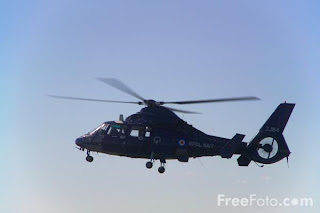
Dauphin naval helicopter
Some jets also have VTOL capability, the first of which is the infamous BAe Harrier. These were the first British jets to operate from Britain's carriers and served well in the Falklands conflict.
One of the newest aircraft designs, the US F-35 JSF, also has VTOL capability.

BAe Harrier

F-35 JSF (Lightning II)
8.Reconnaissance aircraft
Recon aircraft were the first military aircraft used. WW1 saw them gathering vital information about enemy troop positions and serving as artillery directors. One example is the Royal Aircraft Factory Be.2 biplane.
From then till now mainly modified fighters have served in the recon role, and satellites in the space age. But there are some aircraft that specialises in this role: Among them is the U.S. U-2 high-altitude spyplane and Mach 3 SR-71 Blackbird, used to gather information on the USSR during the Cold War. The Soviets however, mainly used modified bombers in this mission.

U-2

SR-71 Blackbird
7.Helicopters/Vertical Takeoff and Landing (VTOL) aircraft
The name says it all. Helicopters and VTOL aircraft are aircraft that have the capability to take off and land in the vertical.
Such abilities hold great use. These aircrafts' virtually nil takeoff and landing distance enable them to operate from almost any terrain, provided that it's flat enough, of course. Besides that, these aircraft can hover in position whereas normal aircraft have to constantly keep moving to generate lift to fly.
In civilian roles, helicopters have uses from search and rescue to transport to even news reporting platforms. However in the military helicopters have three main uses: cargo transport, ground attack and naval antisubmarine/antisurface warfare.
In the ground attack role, helicopters are useful as they can easily overtake any ground vehicle (and definitely people) having a perfect bird's eye view, and being able to stay on the battlefield longer. Soviet Mil-24 Hind gunships wreaked havoc in Afghanistan despite suffering casualties until the Mujaheddin became adept at sending Stinger missiles up their tailpipes. A modern example of helicopter gunships is the AH-64 Apache.

Mil-24 Hind

AH-64 Apache
Helicopters also find good use on naval platforms where they can operate in the ASW role and sometimes the antiship role. Modern warships starting from the corvette class and larger usually provide facilities for helicopters.

Dauphin naval helicopter
Some jets also have VTOL capability, the first of which is the infamous BAe Harrier. These were the first British jets to operate from Britain's carriers and served well in the Falklands conflict.
One of the newest aircraft designs, the US F-35 JSF, also has VTOL capability.

BAe Harrier

F-35 JSF (Lightning II)
8.Reconnaissance aircraft
Recon aircraft were the first military aircraft used. WW1 saw them gathering vital information about enemy troop positions and serving as artillery directors. One example is the Royal Aircraft Factory Be.2 biplane.
From then till now mainly modified fighters have served in the recon role, and satellites in the space age. But there are some aircraft that specialises in this role: Among them is the U.S. U-2 high-altitude spyplane and Mach 3 SR-71 Blackbird, used to gather information on the USSR during the Cold War. The Soviets however, mainly used modified bombers in this mission.

U-2

SR-71 Blackbird
Friday, November 28, 2008
Military Aircraft Classes (2 of 4)
This is a continuation of the previous post:
4. Electronic Warfare(EW) aircraft
These aircraft carry a host of electrical devices to aid in electronic warfare, that is, activities denying the use of the electromagnetic spectrum(i.e. radar, infrared) for the enemy.
Most of the time these equipment are put to use to help jam enemy radar or detect and analyze new forms of radar or fire-control emissions. Jamming, or MIJIing, of radar disallows the enemy's radar to function, thereby destroying the enemy's ability to detect incoming aircraft, missiles and other units, as well as rendering radar guided missiles and artillery inaccurate and potentially useless.
If the enemy is found to be using a new type of radar or fire-control equipment that depends on electromagnetic emissions, these aircraft can record these emissions for analysis. This enables us to come up with new systems or jamming bandwidths to disable the said electromagnetic equipment.
F-4G Phantom II 'Wild Weasels' were one of the first electronic warfare aircraft used extensively, which use in the Vietnam War diminished the Viet Cong's capability to direct SAM-2 antiair missiles and other radar-guided artillery against US aircraft.
The EA-6B Prowler is one of today's modern EW aircraft.

F-4G 'Wild Weasel'

EA-6B Prowler
5.Airborne Warning And Control (AWACS) aircraft
AWACS aircraft serve as what one would call an airborne radar station. They carry a high-powered radar which can usually detect air, sea, and land units up to a range of a few hundred kilometres, and if needed vector in other units to deal with threats. As these radar equipment are rather heavy, AWACS platforms are usually multi-engined heavy lift aircraft.
These systems come in two major designs: the first and more common type is the 'rotodome' design where the radar dish is mounted on the top of the aircraft. Examples are the US E-3 Sentry and the Russian A-50 Mainstay.
The second type of design is the EL/M-2075 Phalcon phased-array radar system. This system is newer and more advanced than the rotodome system.

E-3 Sentry AWACS
6.Fighter aircraft
Fighter aircraft are aircraft designed for the purpose of achieving 'air superiority', that is the ability to allow the usage of the sky for one's own aircraft and at the same time deny the enemy usage of it. They were the first aircraft designed to carry weapons into the air, progressing from machine guns and aerial cannon in WW1 and WW2 to radar-guided and infrared seeking missiles and higher-speed aerial cannon(like the Gatling M61 20mm Vulcan) in the 1960s.
These aircraft are generally designed to have high maneuverability, rate of climb, speed and other qualities that help to give it a upper hand in dogfights. Nowadays however, modern fighter designs concentrate more on stealth as most modern air-to-air engagements happen beyond visual range (BVR), apparently rendering the dogfight a rare occasion.

F-22 Raptor Stealth Fighter
Some fighter aircraft are also sometimes relegated the task of bombing enemy targets, hence the appearance of 'fighter-bombers' like the F-105 Thunderchief and modern 'strike fighters' like the F-15E Strike Eagle.

F-15E Strike Eagle
Fighters designed to destroy high-flying, high-speed enemy bombers and missiles are termed 'fighter-interceptors' with the Soviet MiG-21 Fishbed and even more specialised MiG-25 Foxbat and MiG-31 Foxhound as prime examples. However, most interceptor designs sacrifice agility for their speed and rate of climb and consequently would fare worse in a dogfight with pure fighter aircraft.

MiG-21 Fishbed

MiG-31 Foxhound
Some of today's fighter aircraft are multirole aircraft, designed to do both air-to-air combat and ground attack. Then again, this compromise diminishes its capability in pure air combat. Some examples are the F/A-18 Hornet and Malaysia's newest Su-30 MKM.

F/A-18 Hornet

Su-30 MKM
4. Electronic Warfare(EW) aircraft
These aircraft carry a host of electrical devices to aid in electronic warfare, that is, activities denying the use of the electromagnetic spectrum(i.e. radar, infrared) for the enemy.
Most of the time these equipment are put to use to help jam enemy radar or detect and analyze new forms of radar or fire-control emissions. Jamming, or MIJIing, of radar disallows the enemy's radar to function, thereby destroying the enemy's ability to detect incoming aircraft, missiles and other units, as well as rendering radar guided missiles and artillery inaccurate and potentially useless.
If the enemy is found to be using a new type of radar or fire-control equipment that depends on electromagnetic emissions, these aircraft can record these emissions for analysis. This enables us to come up with new systems or jamming bandwidths to disable the said electromagnetic equipment.
F-4G Phantom II 'Wild Weasels' were one of the first electronic warfare aircraft used extensively, which use in the Vietnam War diminished the Viet Cong's capability to direct SAM-2 antiair missiles and other radar-guided artillery against US aircraft.
The EA-6B Prowler is one of today's modern EW aircraft.

F-4G 'Wild Weasel'

EA-6B Prowler
5.Airborne Warning And Control (AWACS) aircraft
AWACS aircraft serve as what one would call an airborne radar station. They carry a high-powered radar which can usually detect air, sea, and land units up to a range of a few hundred kilometres, and if needed vector in other units to deal with threats. As these radar equipment are rather heavy, AWACS platforms are usually multi-engined heavy lift aircraft.
These systems come in two major designs: the first and more common type is the 'rotodome' design where the radar dish is mounted on the top of the aircraft. Examples are the US E-3 Sentry and the Russian A-50 Mainstay.
The second type of design is the EL/M-2075 Phalcon phased-array radar system. This system is newer and more advanced than the rotodome system.

E-3 Sentry AWACS
6.Fighter aircraft
Fighter aircraft are aircraft designed for the purpose of achieving 'air superiority', that is the ability to allow the usage of the sky for one's own aircraft and at the same time deny the enemy usage of it. They were the first aircraft designed to carry weapons into the air, progressing from machine guns and aerial cannon in WW1 and WW2 to radar-guided and infrared seeking missiles and higher-speed aerial cannon(like the Gatling M61 20mm Vulcan) in the 1960s.
These aircraft are generally designed to have high maneuverability, rate of climb, speed and other qualities that help to give it a upper hand in dogfights. Nowadays however, modern fighter designs concentrate more on stealth as most modern air-to-air engagements happen beyond visual range (BVR), apparently rendering the dogfight a rare occasion.

F-22 Raptor Stealth Fighter
Some fighter aircraft are also sometimes relegated the task of bombing enemy targets, hence the appearance of 'fighter-bombers' like the F-105 Thunderchief and modern 'strike fighters' like the F-15E Strike Eagle.

F-15E Strike Eagle
Fighters designed to destroy high-flying, high-speed enemy bombers and missiles are termed 'fighter-interceptors' with the Soviet MiG-21 Fishbed and even more specialised MiG-25 Foxbat and MiG-31 Foxhound as prime examples. However, most interceptor designs sacrifice agility for their speed and rate of climb and consequently would fare worse in a dogfight with pure fighter aircraft.

MiG-21 Fishbed

MiG-31 Foxhound
Some of today's fighter aircraft are multirole aircraft, designed to do both air-to-air combat and ground attack. Then again, this compromise diminishes its capability in pure air combat. Some examples are the F/A-18 Hornet and Malaysia's newest Su-30 MKM.

F/A-18 Hornet

Su-30 MKM
Thursday, November 27, 2008
Military Aircraft Classes (1 of 4)
Over the years the aircraft family has grown to encompass many types of aircraft, from the first reconnaissance airplanes in WW1, to fighters, bombers, and more. Below is a post about modern aircraft(military) classification:
Aircraft can be classified according to their use:
1. Attack aircraft
Attack aircraft are essentially aircraft designed with the objective of ground attack, to provide friendly troops with close-air-support(CAS), i.e. helping to destroy 'problematic' units like armored vehicles or dug-in troop concentrations which would give a hard time to friendly troops. These aircraft are characterized with having a long endurance and loiter time over the battlefield to give the quickest response to help troops under fire. A good example of such aircraft is the US A-10 Thunderbolt II (nickname Warthog). It has an awesome gun (the GAU-8 Avenger Gatling gun) which can chew tanks to pieces and hardpoints carrying various types of weapons for its mission. It also has two turbofan engines which give it an excellent loiter time, and is robust and tough enough to absorb battle damage. Without proper antiair, no ground commander can feel safe with one of these flying around.

A-10 Thunderbolt II
2. Bomber aircraft
Bomber aircraft can be divided into two kinds of aircraft:
i)Tactical Bomber (Fighter-Bomber)
ii)Strategic Bomber
Tactical fighter-bombers are mainly used to destroy the enemy's warfighting infrastructure on the battlefield. An example of this is the US F-105 Thunderchief used in the Vietnam War and the F-111 Aardvark. The Russian Tu-22M Backfire may also be considered as an example.
Strategic bombers are used to destroy the enemy's infrastructure behind the battlefield. The well-known B-52 Stratofortress is a good example. Newer strategic bombers are the B-1B Lancer, the B-2 Spirit stealth bomber and the Russian Tu-160 Blackjack.
These bombers can be characterized by having a long range and for some, cruising at high altitude. They are also usually not as agile as fighters due to their heavy bombload and weight. As such, without proper planning and support they can be sitting ducks for AAA (Anti-Aircraft Artillery) or enemy fighters.

F-111 Aardvark

B-52 Stratofortress
3. Cargo aircraft
Cargo aircraft... carry cargo. They are used to help transport supplies over terrain which would be hard for normal ground transports to traverse, i.e. mountains, desert, etc. Cargo aircraft can also ferry the cargo quicker than by ground or sea.
They can sometimes serve an offensive purpose as well, by airdropping paratroopers or, in the case of the C-130 Hercules, drop the largest conventional bomb in the world, the GBU-43/B MOAB (Massive Ordnance Air Blast bomb, or Mother Of All Bombs).
Cargo aircraft, like bombers, usually have high payload capacity and is of similar layout and shape with normal large passenger commercial aircraft. Some, like the C-5 Galaxy, have a massive lift capacity, with one C-5 being able to transport 2 MBTs(Main Battle Tanks). Others focus more on versatility, with the C-17 Globemaster III as a good example, being able to operate from unimproved front-line airstrips only 1 km long.
In today's wars, logistics play a vital role in deciding the outcome of a military action. Cargo aircraft serve such a purpose, for a commander who can quickly supply his army with the necessary equipment and supplies has the advantage.

C-17 Globemaster III

C-130 Hercules
This is a long article, so this post will be continued. Right now, pls enjoy first.
Aircraft can be classified according to their use:
1. Attack aircraft
Attack aircraft are essentially aircraft designed with the objective of ground attack, to provide friendly troops with close-air-support(CAS), i.e. helping to destroy 'problematic' units like armored vehicles or dug-in troop concentrations which would give a hard time to friendly troops. These aircraft are characterized with having a long endurance and loiter time over the battlefield to give the quickest response to help troops under fire. A good example of such aircraft is the US A-10 Thunderbolt II (nickname Warthog). It has an awesome gun (the GAU-8 Avenger Gatling gun) which can chew tanks to pieces and hardpoints carrying various types of weapons for its mission. It also has two turbofan engines which give it an excellent loiter time, and is robust and tough enough to absorb battle damage. Without proper antiair, no ground commander can feel safe with one of these flying around.

A-10 Thunderbolt II
2. Bomber aircraft
Bomber aircraft can be divided into two kinds of aircraft:
i)Tactical Bomber (Fighter-Bomber)
ii)Strategic Bomber
Tactical fighter-bombers are mainly used to destroy the enemy's warfighting infrastructure on the battlefield. An example of this is the US F-105 Thunderchief used in the Vietnam War and the F-111 Aardvark. The Russian Tu-22M Backfire may also be considered as an example.
Strategic bombers are used to destroy the enemy's infrastructure behind the battlefield. The well-known B-52 Stratofortress is a good example. Newer strategic bombers are the B-1B Lancer, the B-2 Spirit stealth bomber and the Russian Tu-160 Blackjack.
These bombers can be characterized by having a long range and for some, cruising at high altitude. They are also usually not as agile as fighters due to their heavy bombload and weight. As such, without proper planning and support they can be sitting ducks for AAA (Anti-Aircraft Artillery) or enemy fighters.

F-111 Aardvark

B-52 Stratofortress
3. Cargo aircraft
Cargo aircraft... carry cargo. They are used to help transport supplies over terrain which would be hard for normal ground transports to traverse, i.e. mountains, desert, etc. Cargo aircraft can also ferry the cargo quicker than by ground or sea.
They can sometimes serve an offensive purpose as well, by airdropping paratroopers or, in the case of the C-130 Hercules, drop the largest conventional bomb in the world, the GBU-43/B MOAB (Massive Ordnance Air Blast bomb, or Mother Of All Bombs).
Cargo aircraft, like bombers, usually have high payload capacity and is of similar layout and shape with normal large passenger commercial aircraft. Some, like the C-5 Galaxy, have a massive lift capacity, with one C-5 being able to transport 2 MBTs(Main Battle Tanks). Others focus more on versatility, with the C-17 Globemaster III as a good example, being able to operate from unimproved front-line airstrips only 1 km long.
In today's wars, logistics play a vital role in deciding the outcome of a military action. Cargo aircraft serve such a purpose, for a commander who can quickly supply his army with the necessary equipment and supplies has the advantage.

C-17 Globemaster III

C-130 Hercules
This is a long article, so this post will be continued. Right now, pls enjoy first.
Sunday, November 23, 2008
Submarine classes
Submarines can be divided into a few classes depending on their powerplant systems and their use.
Submarine powerplants basically fall into two categories:
1. Diesel-electric powerplants
2. Nuclear powerplants
Diesel-electric powerplants were the first successful powerplants introduced in submarines. The system consists of diesel engines, electric motors and batteries.
Diesel-electric submarines obtain their power from diesel engines while running on the surface of the sea and batteries (charged by the diesel engines) powering electric motors while submerged. Since WW2 snorkels have allowed submarines to run their diesel engines submerged, thus giving them more stealth.
These subs come in two basic types:
1. Hunter-killer subs (SSKs), whose mission is to seek out and destroy enemy subs;
2. Ballistic-missile subs (SSBs, now obsolete), whose mission is to carry ballistic nuclear missiles(SLBMs) for deterrence.
Examples of SSKs are the Russian Kilo class, the French-Spanish Scorpene class, WW2 German U-boats and the WW2 USA Gato class.
An example of an SSB is the Russian Zulu-class.

A Russian Kilo SSK

The Scorpene-class SSK
Nuclear-powered submarines only came about during the 1950s-1960s period of the Cold War, with the first, USS Nautilus commissioned in 1954. These submarines draw power from a nuclear powerplant in the hull, which provides electricity to power electric motors which drive the propeller/pumpjet.

The USS Nautilus, the first nuclear sub
Performance-wise, these submarines surpass diesel-electric subs by a wide margin as they can travel much faster, longer and in some cases, deeper. They do not need to surface for air as nuclear powerplants do not need it. However, they are quite large, complicated and in some cases less stealthy than SSKs due to their nuclear reactor (SSKs can run silently with secured electrical and diesel motors whereas nuclear subs need to keep running coolant pumps to prevent the reactor from overheating).
These subs again can be divided into two types:
1. Attack submarines (SSNs) - same use as SSKs;
2. Ballistic nuclear submarines (SSBNs) - same use as SSBs
Examples of SSNs are the US Los-Angeles, Seawolf, and Virginia class, the Russian Alfa, Victor, and Akula class, the British Trafalgar class,the French Rubis class, and the Chinese Han class.

A US Seawolf-class SSN

A Russian Akula-class SSN
Examples of SSBNs are the US Ohio class, the Russian Typhoon and Delta class, the British Vanguard class, the French Le Redoutable and Le Triomphant class, and the Chinese Xia class.

Ohio-class SSBN

Typhoon-class SSBN

A SLBM launch
Note: SS means Submersible Ship; B means Ballistic(Missile); K means Killer (Hunter-Killer); N means Nuclear.
SSNs are already considered as attack submarines; there is no need for SSKN.
Submarine powerplants basically fall into two categories:
1. Diesel-electric powerplants
2. Nuclear powerplants
Diesel-electric powerplants were the first successful powerplants introduced in submarines. The system consists of diesel engines, electric motors and batteries.
Diesel-electric submarines obtain their power from diesel engines while running on the surface of the sea and batteries (charged by the diesel engines) powering electric motors while submerged. Since WW2 snorkels have allowed submarines to run their diesel engines submerged, thus giving them more stealth.
These subs come in two basic types:
1. Hunter-killer subs (SSKs), whose mission is to seek out and destroy enemy subs;
2. Ballistic-missile subs (SSBs, now obsolete), whose mission is to carry ballistic nuclear missiles(SLBMs) for deterrence.
Examples of SSKs are the Russian Kilo class, the French-Spanish Scorpene class, WW2 German U-boats and the WW2 USA Gato class.
An example of an SSB is the Russian Zulu-class.

A Russian Kilo SSK

The Scorpene-class SSK
Nuclear-powered submarines only came about during the 1950s-1960s period of the Cold War, with the first, USS Nautilus commissioned in 1954. These submarines draw power from a nuclear powerplant in the hull, which provides electricity to power electric motors which drive the propeller/pumpjet.

The USS Nautilus, the first nuclear sub
Performance-wise, these submarines surpass diesel-electric subs by a wide margin as they can travel much faster, longer and in some cases, deeper. They do not need to surface for air as nuclear powerplants do not need it. However, they are quite large, complicated and in some cases less stealthy than SSKs due to their nuclear reactor (SSKs can run silently with secured electrical and diesel motors whereas nuclear subs need to keep running coolant pumps to prevent the reactor from overheating).
These subs again can be divided into two types:
1. Attack submarines (SSNs) - same use as SSKs;
2. Ballistic nuclear submarines (SSBNs) - same use as SSBs
Examples of SSNs are the US Los-Angeles, Seawolf, and Virginia class, the Russian Alfa, Victor, and Akula class, the British Trafalgar class,the French Rubis class, and the Chinese Han class.

A US Seawolf-class SSN

A Russian Akula-class SSN
Examples of SSBNs are the US Ohio class, the Russian Typhoon and Delta class, the British Vanguard class, the French Le Redoutable and Le Triomphant class, and the Chinese Xia class.

Ohio-class SSBN

Typhoon-class SSBN

A SLBM launch
Note: SS means Submersible Ship; B means Ballistic(Missile); K means Killer (Hunter-Killer); N means Nuclear.
SSNs are already considered as attack submarines; there is no need for SSKN.
Subscribe to:
Posts (Atom)